
A shredded cushion on the floor can change your mood in seconds. I have walked into rooms that looked perfectly normal hours earlier, only to find stuffing scattered like snow across the carpet. In those moments, frustration competes with confusion because the destruction feels personal, even though it rarely is.
How to stop destructive chewing became a priority in my home once I realized the pattern was not random. Dogs chew for many reasons, and the behavior often reflects unmet needs rather than defiance. Instead of reacting with anger, I had to step back and examine what was driving the urge in the first place.
Why Dogs Chew In The First Place
Chewing is a natural canine behavior. It relieves stress, exercises jaw muscles, and satisfies curiosity about texture and taste. Expecting a dog not to chew at all is unrealistic because the impulse is deeply ingrained.
Puppies chew during teething to soothe gum discomfort. Adult dogs chew to explore their environment or release energy. In both cases, the behavior serves a purpose, even if the chosen object is inappropriate.
How to stop destructive chewing begins with accepting that chewing itself is not the enemy. The goal is redirection, not elimination. Once I embraced that distinction, solutions became clearer.
The Role Of Boredom And Excess Energy
Idle time can quickly turn into destructive behavior. On days when physical exercise falls short, I notice an increase in interest toward furniture legs or shoes. Energy has to go somewhere, and if it is not channeled productively, it often targets household items.
Long walks, structured play sessions, and mentally stimulating games make a noticeable difference. A tired dog is less likely to search for entertainment through destruction. Mental fatigue, in particular, reduces impulsive behavior significantly.
How to stop destructive chewing often starts with examining daily routines. Increasing physical and cognitive outlets reduces the need for self invented projects.
Anxiety And Stress Related Chewing
Not all chewing stems from boredom. Anxiety can trigger repetitive or intense destruction. I have seen dogs target door frames or window sills during separation, driven by distress rather than curiosity.
Stress chewing often leaves distinct patterns. Items near exits or objects carrying the owner’s scent become prime targets. Addressing the root cause requires more than replacing damaged belongings.
Gradual desensitization to departures and creating a calm pre departure routine can ease anxiety driven chewing. Ignoring emotional triggers while focusing solely on the damage rarely solves the problem.
Puppy Teething Challenges
Puppies explore the world with their mouths. Teething amplifies that tendency as adult teeth push through sensitive gums. During this phase, almost anything within reach becomes a potential chew toy.
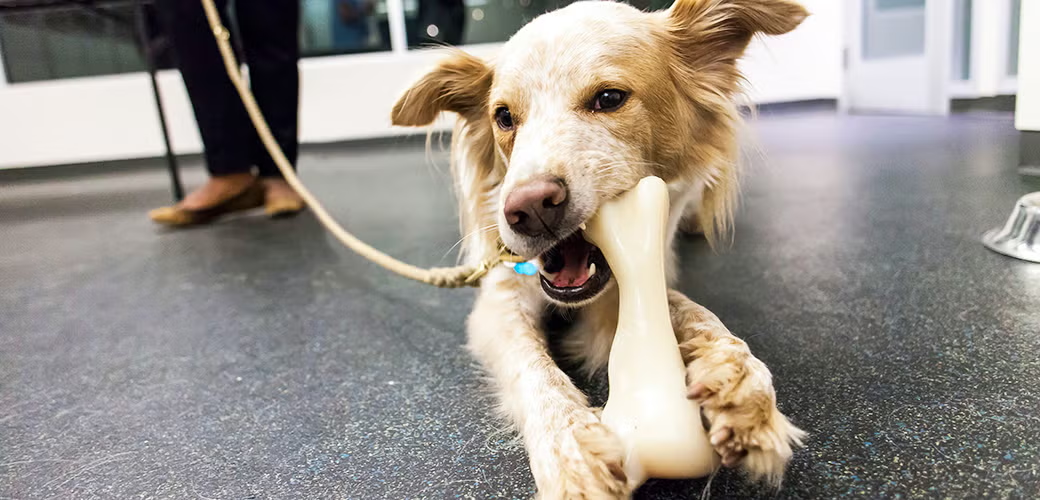
Providing appropriate chew options is critical. Durable rubber toys, frozen washcloths, and puppy safe chews redirect the urge safely. Rotation keeps novelty alive and reduces interest in forbidden items.
How to stop destructive chewing in puppies requires vigilance and patience. Expecting perfection during teething sets unrealistic standards and leads to unnecessary frustration.
Management Is Not Failure
Supervision plays a central role in prevention. Allowing free roam access before a dog has earned it often invites trouble. I learned to limit access to high risk areas until reliable habits developed.
Crate training and baby gates provide safe boundaries. These tools prevent rehearsal of destructive behavior, which is essential because repetition strengthens habits. Preventing mistakes is easier than correcting them afterward.
How to stop destructive chewing involves proactive management. Setting dogs up for success reduces opportunities for unwanted behavior to become ingrained.
Teaching Appropriate Chewing Habits
Redirection works best when applied consistently. If I catch my dog investigating a table leg, I calmly interrupt and offer a designated chew toy. Immediate substitution clarifies acceptable alternatives.
Praise reinforces the new choice. Positive reinforcement encourages repetition of appropriate behavior. Over time, the dog begins seeking out approved items independently.
Consistency matters more than intensity. Calm redirection builds understanding without creating fear or confusion.
The Importance Of Enrichment
Enrichment transforms idle time into productive engagement. Puzzle toys, treat dispensing balls, and scent games provide mental stimulation that reduces destructive impulses. I noticed a significant decline in chewing once enrichment became routine rather than occasional.
Rotating toys prevents boredom. Leaving all toys available at once diminishes novelty. Introducing them strategically maintains interest and focus.
How to stop destructive chewing often requires creativity. Enrichment fills gaps that might otherwise invite mischief.
Avoiding Punishment Pitfalls
Punishing a dog after discovering damage rarely achieves meaningful results. Dogs do not connect delayed consequences with past actions. Scolding hours later only creates confusion or anxiety.
Even immediate punishment can backfire if it is harsh or inconsistent. Fear may suppress behavior temporarily but does not address underlying causes. A dog that feels threatened may chew secretly rather than stop entirely.
Redirecting and reinforcing positive choices produces more sustainable change. Patience outperforms punishment in the long run.
Identifying High Value Targets
Certain objects attract dogs more than others. Shoes carry strong human scent, making them particularly appealing. Remote controls and small electronics combine texture and novelty in ways dogs find irresistible.
Recognizing these high value targets helps guide prevention. Storing tempting items out of reach reduces temptation. Environmental control supports training efforts significantly.
How to stop destructive chewing includes making poor choices less accessible. Removing opportunity simplifies the equation.
Addressing Separation Destruction
Separation related chewing requires careful evaluation. Leaving a dog alone for extended periods without preparation increases stress. Gradual training builds tolerance for solitude.
Short departures paired with calm returns establish predictability. Providing long lasting chew toys during absences channels energy appropriately. Monitoring behavior through cameras can reveal patterns that inform adjustments.
Addressing emotional needs alongside physical management creates lasting improvement. Ignoring the emotional component often leads to recurring issues.
Exercise As A Preventative Tool
Physical exercise remains one of the most powerful deterrents. Structured walks, fetch sessions, and interactive play burn off excess energy. Regular routines stabilize mood and reduce restlessness.
Mental stimulation complements physical activity. Training sessions that challenge focus create satisfying fatigue. A dog engaged in purposeful tasks is less likely to invent destructive outlets.
How to stop destructive chewing consistently circles back to meeting foundational needs. Balanced exercise forms the cornerstone of behavioral stability.
Consistency Across The Household
Mixed signals undermine progress. If one family member allows chewing on old socks while another forbids it, confusion arises. Clear boundaries must remain consistent for habits to solidify.
Communicating rules among household members prevents accidental reinforcement. Agreement on redirection methods ensures uniform responses. Consistency accelerates behavior change.
Unified effort strengthens clarity. Dogs thrive on predictable expectations.
Recognizing Progress And Setbacks
Behavior change unfolds gradually. Occasional setbacks do not erase progress. I learned to evaluate trends rather than isolated incidents.
If destructive chewing decreases from daily to occasional, improvement is evident. Celebrating incremental success maintains motivation. Expecting flawless behavior too soon creates unnecessary disappointment.
How to stop destructive chewing demands resilience from the owner as much as discipline from the dog. Patience sustains momentum.
Building A Stronger Bond Through Training
Training sessions focused on impulse control enhance overall behavior. Teaching commands like leave it and drop it creates practical tools for redirecting attention. Practicing these skills in low distraction settings builds reliability.
Positive reinforcement fosters cooperation rather than resistance. Mutual trust grows as communication improves. Chewing becomes part of a broader conversation about boundaries and expectations.
The relationship benefits extend beyond furniture protection. Clear guidance strengthens confidence and connection.
Final Thoughts
Destructive chewing can test patience and strain relationships, but it rarely stems from malice. It reflects instinct, energy, emotion, and sometimes confusion about boundaries. How to stop destructive chewing requires a balanced strategy that combines management, enrichment, exercise, and consistent training.
Meeting a dog’s physical and emotional needs transforms destructive tendencies into constructive habits. With patience and structured guidance, inappropriate chewing fades while appropriate outlets take its place. The shredded cushions eventually become a distant memory, replaced by a calmer and more harmonious household.
